What Materials Do We Use in Custom Watch Manufacturing?
Selecting the right material is one of the most critical decisions in watchmaking. It defines not only durability and performance, but also the character and perception of the final product. In our custom watch projects, we work with a wide range of materials — from industry-standard alloys to highly specialized composites.
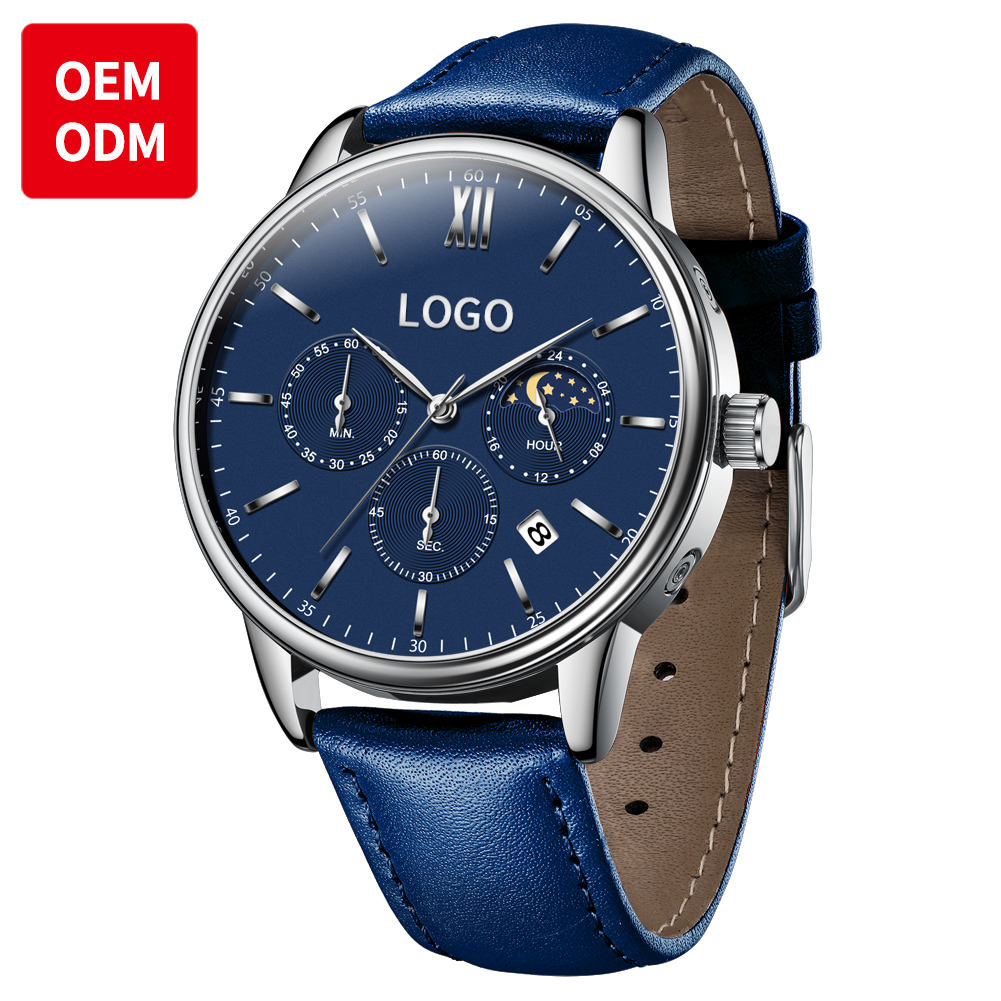
Image source: Internet. We do not publish our latest designs on the website.
Stainless Steel — The Industry Foundation
The most commonly used material in our projects is 316L stainless steel. It offers excellent corrosion resistance, high strength, and outstanding stability during machining and finishing. Its versatility allows for a wide range of surface treatments, including brushing, polishing, sandblasting, and coating.
We have also worked with 904L stainless steel in selected projects, although it is less frequently used due to its higher cost and machining complexity.
- Case: 316L Stainless Steel
- Case Back: 316L Stainless Steel
- Bezel: 316L / Aluminum / Ceramic
- Crown: 316F Stainless Steel
- Buckle: 316L Stainless Steel
- Bracelet: 316L Stainless Steel
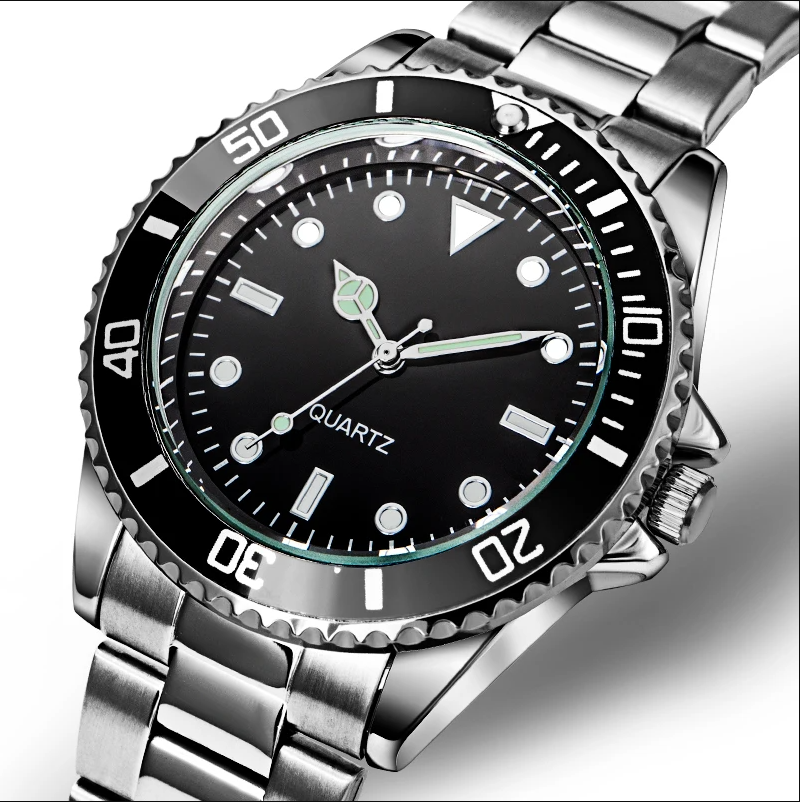
Image source: Internet. We do not publish our latest designs on the website.
Aluminum — Lightweight but Selective
Aluminum watches are relatively easy to manufacture due to the material’s softness and machinability. However, we intentionally limit its use, as our focus remains on producing high-end timepieces with a premium feel and long-term durability.
Titanium — Strength Meets Lightness
Titanium is frequently used in our watch cases, offering an exceptional strength-to-weight ratio and superior corrosion resistance. It provides a modern, technical aesthetic while remaining extremely comfortable on the wrist.
In many designs, titanium cases are paired with stainless steel bracelets and buckles, achieving a balance between performance and refined finishing.

Image source: Internet. We do not publish our latest designs on the website.
Damascus Steel — Unique by Nature
We are also capable of machining Damascus steel, a material known for its distinctive layered patterns formed through repeated folding and forging. Each piece carries a unique, organic texture, making every watch visually one of a kind.
Beyond aesthetics, Damascus steel offers excellent toughness, though it requires careful processing and finishing to achieve consistent quality.
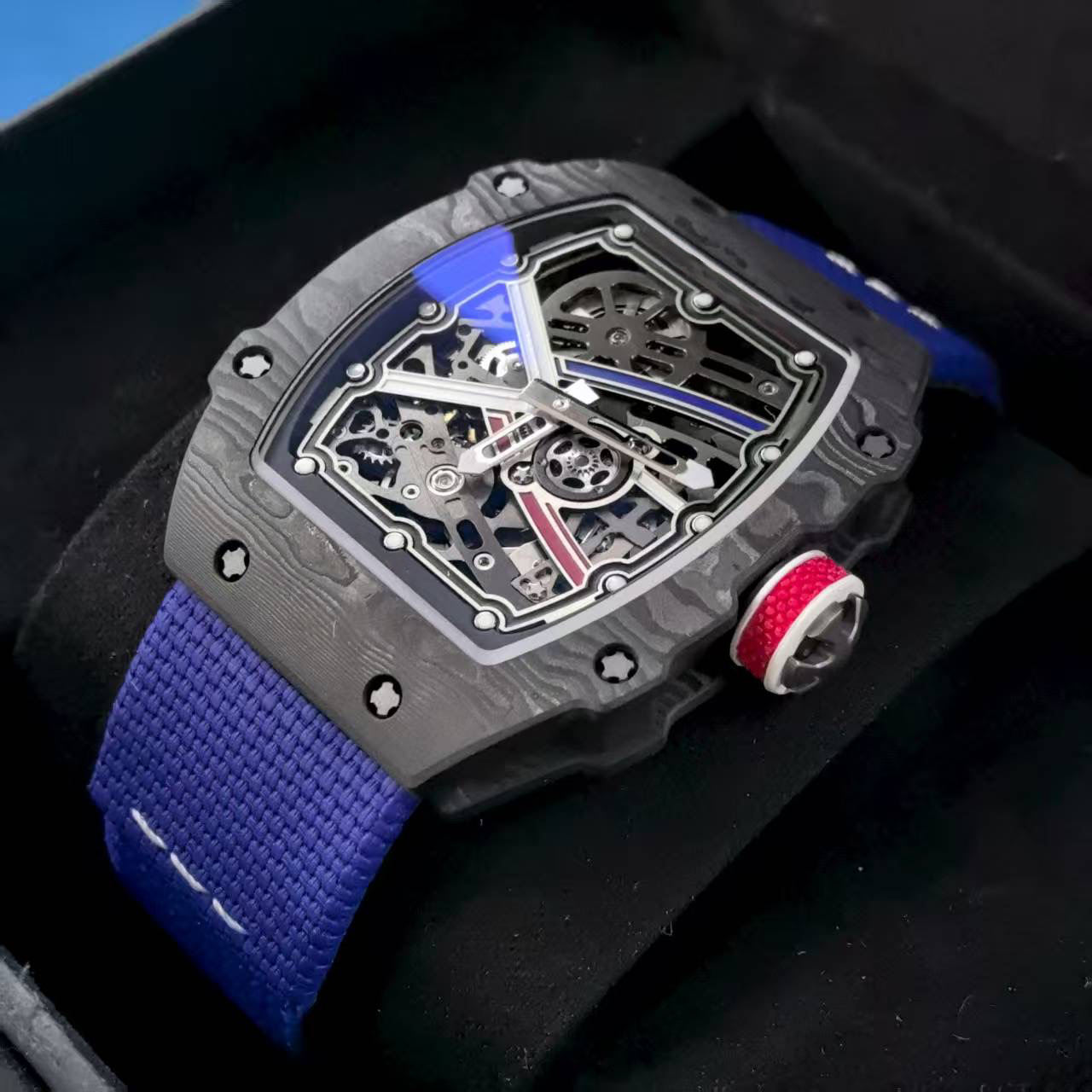
Image source: Internet. We do not publish our latest designs on the website.
Carbon Fiber — Advanced Composites
For carbon fiber components, we collaborate with specialized partners who manufacture parts based on our engineering drawings. All components are then inspected and assembled under our quality control system.
Carbon fiber can be applied in various ways — from bezels paired with metal cases, to full bracelets or even dial elements. Its appeal lies in its ultra-lightweight nature, high strength, and distinctive woven texture that conveys a modern, performance-driven identity.
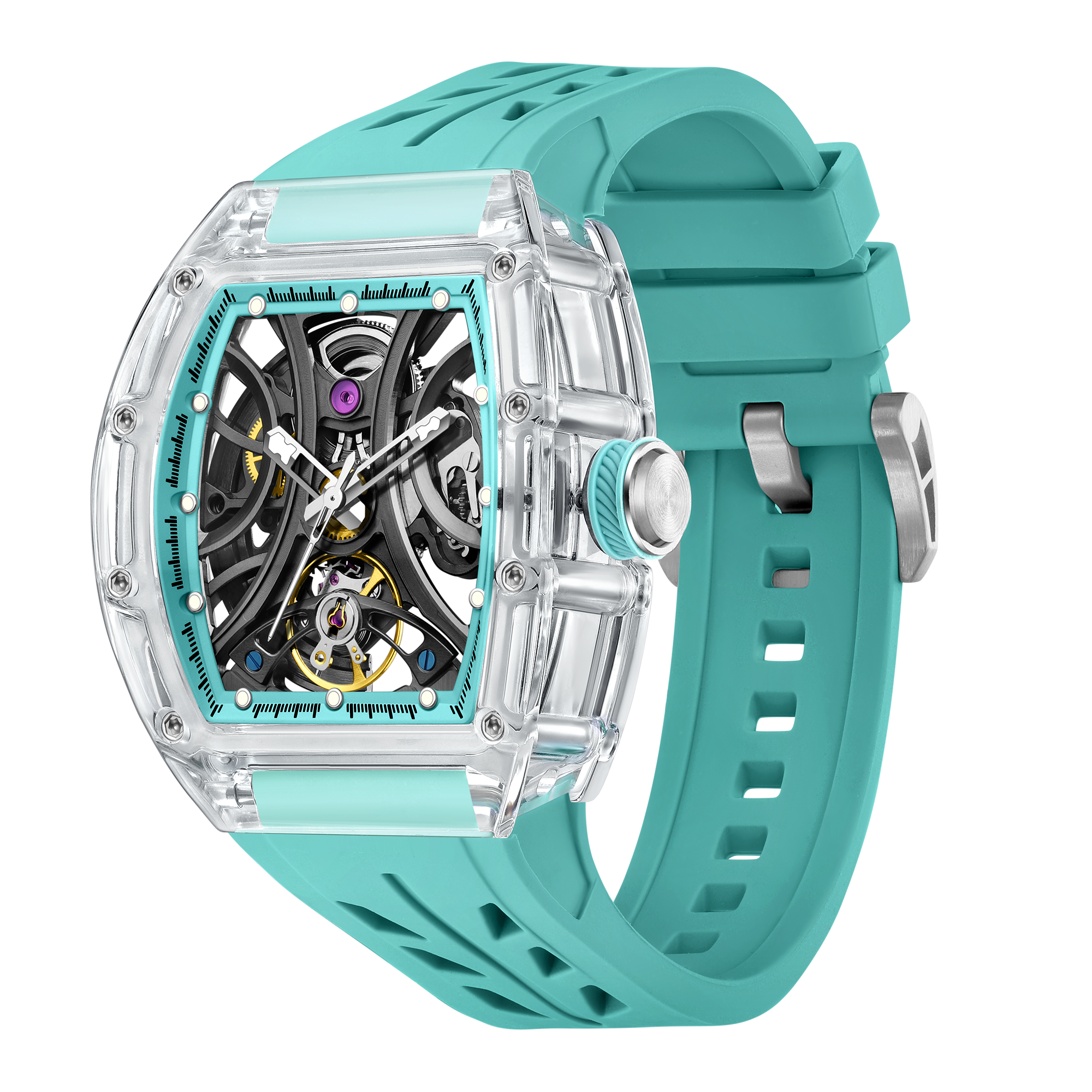
Image source: Internet. We do not publish our latest designs on the website.
Crystal (K9) — Transparency and Precision
Working with crystal requires entirely different equipment and processing techniques compared to metals. We have extensive experience in producing crystal cases and bracelets, resulting in striking, transparent designs.
The material we use is K9 crystal, known for its high clarity, excellent optical performance, and refined finish. Unlike sapphire, K9 allows for more flexible shaping and cost efficiency, while maintaining a premium appearance. It is also fundamentally different from plastic or acrylic, offering superior density and visual depth.